
Sport, Screens, and the Kids We're Losing: My Takeaways from #LPC2026
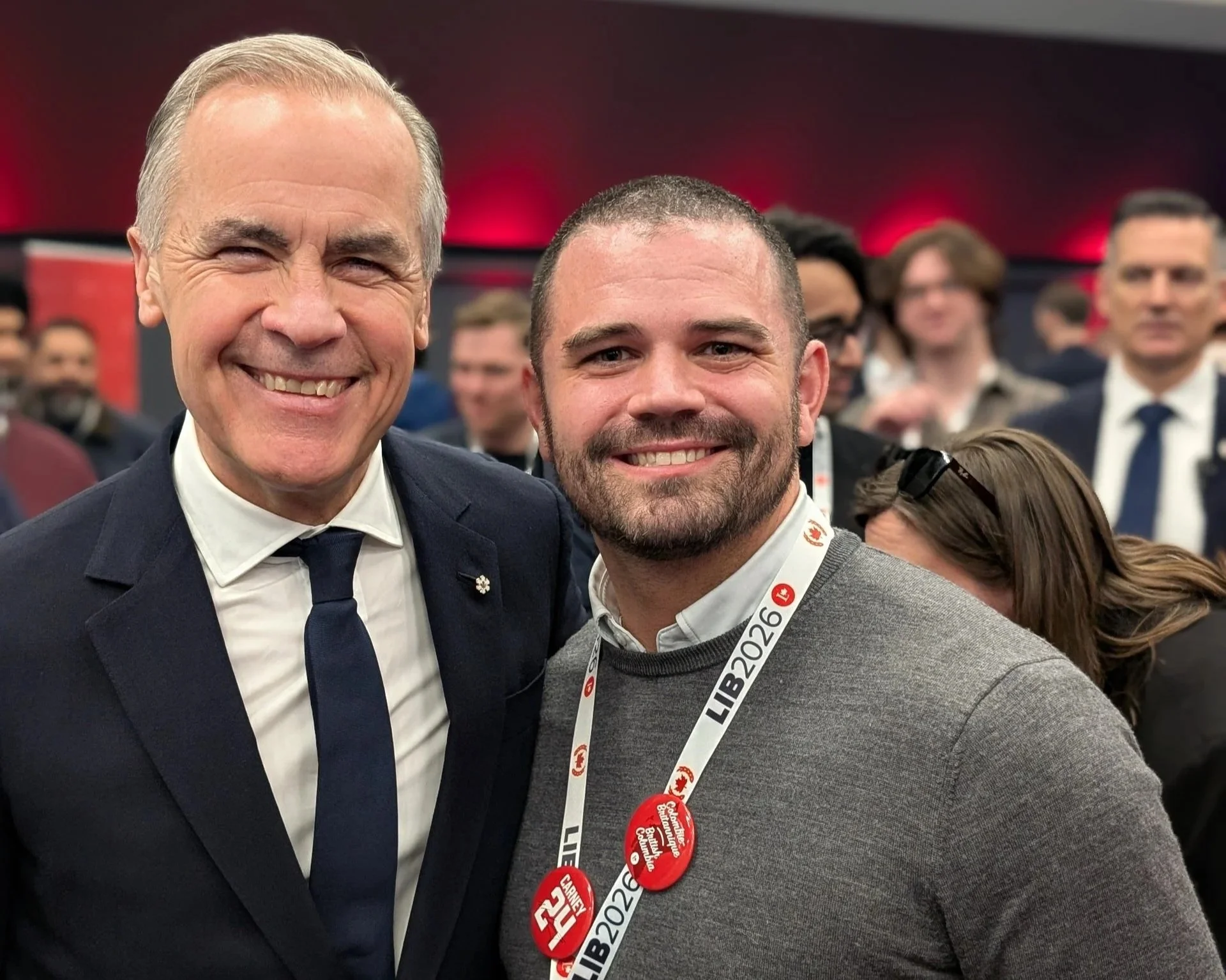
Prime Minister Mark Carney and myself
I spent this past weekend at the Liberal national convention in Montréal. Three days of panels, policy debates, hallway conversations, and more coffee than I'd care to admit. It was energizing — the kind of weekend that sends you home with a full notebook and a buzzing brain.But the conversations that stuck with me most weren't about federal politics in the abstract. They were about the things I think about almost everyday: what kind of community are we building, and who are we building it for?
Three threads in particular keep pulling at me. They're connected in ways I'm still working through, but I want to share them — because I think they matter here in Port Moody as much as anywhere.
Sport as Community Health Infrastructure
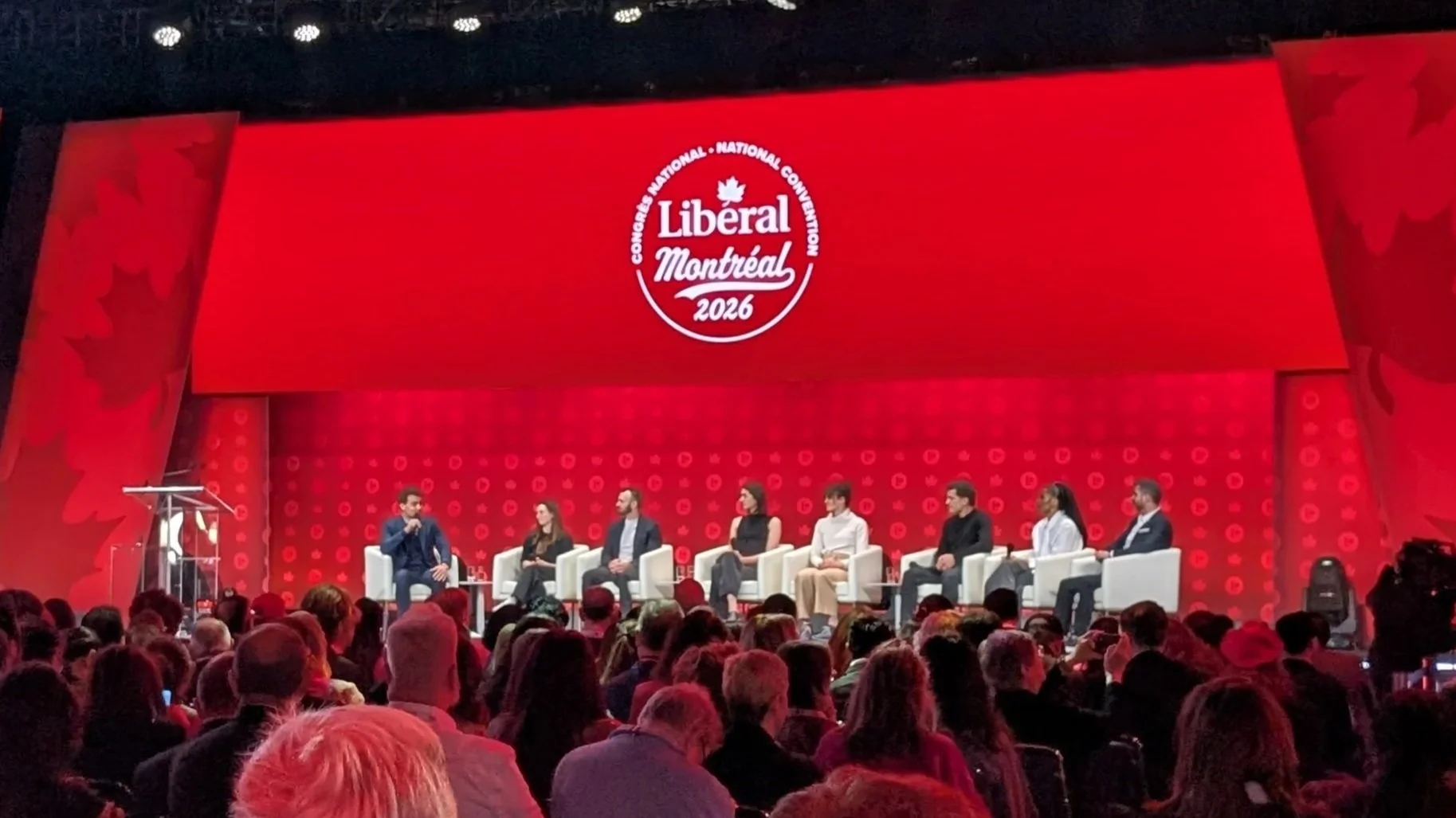
“We have an Olympic medalist, a World Cup champion, a Stanley Cup champion all saying that the health of our sports system isn't measured by those accomplishments, but by the health of our children.”
Adam Van Koeverden, Secretary of State for Sport
The convention featured a panel with Secretary of State for Sport Adam Van Koeverden and a group of incredible Canadian Olypmic and Paralympic athletes — Marion Thénault, Benoît Huot, Phylicia George, Tyler McGregor, Isabelle Weidemann, and Stanley Cup champion Andrew Ference. These are Olympians, Paralympians, and champions who know what elite performance looks like. But what struck me wasn't the medal talk. It was how every one of them traced their success back to a local community — a pool, a rink, a club, a coach who showed up.
Van Koeverden put it perfectly: "We have an Olympic medalist, a World Cup champion, a Stanley Cup champion all saying that the health of our sports system isn't measured by those accomplishments, but by the health of our children."
That line has stuck with me. Sport isn't just recreation. It's one of the most powerful ways we give young people structure, belonging, identity, and mentorship. And several panelists made a point that deserves more attention: investment in sport is investment in public health. When kids and adults are active and connected through sport, health outcomes improve across the board — physical, mental, social. We need to think about this holistically. The true measure of our success in sport shouldn't be medal counts alone. It should be how many people are participating and how healthy our population is.
When we underinvest in community sport infrastructure — when ice time is unaffordable, when fields are overbooked, when volunteer coaches burn out — we're not just losing games. We're losing one of the few spaces where kids build real relationships with adults and peers outside of school and screens. And we're putting more pressure on a health system that's already stretched thin.
In Port Moody, we're lucky to have strong community sport programs. But anyone who's tried to book a field or find an affordable league for their kid knows the pressure points are real. I came away from that panel thinking we need to talk about sport as civic infrastructure and public health infrastructure, not just a nice-to-have.
Social Media and Protecting Kids
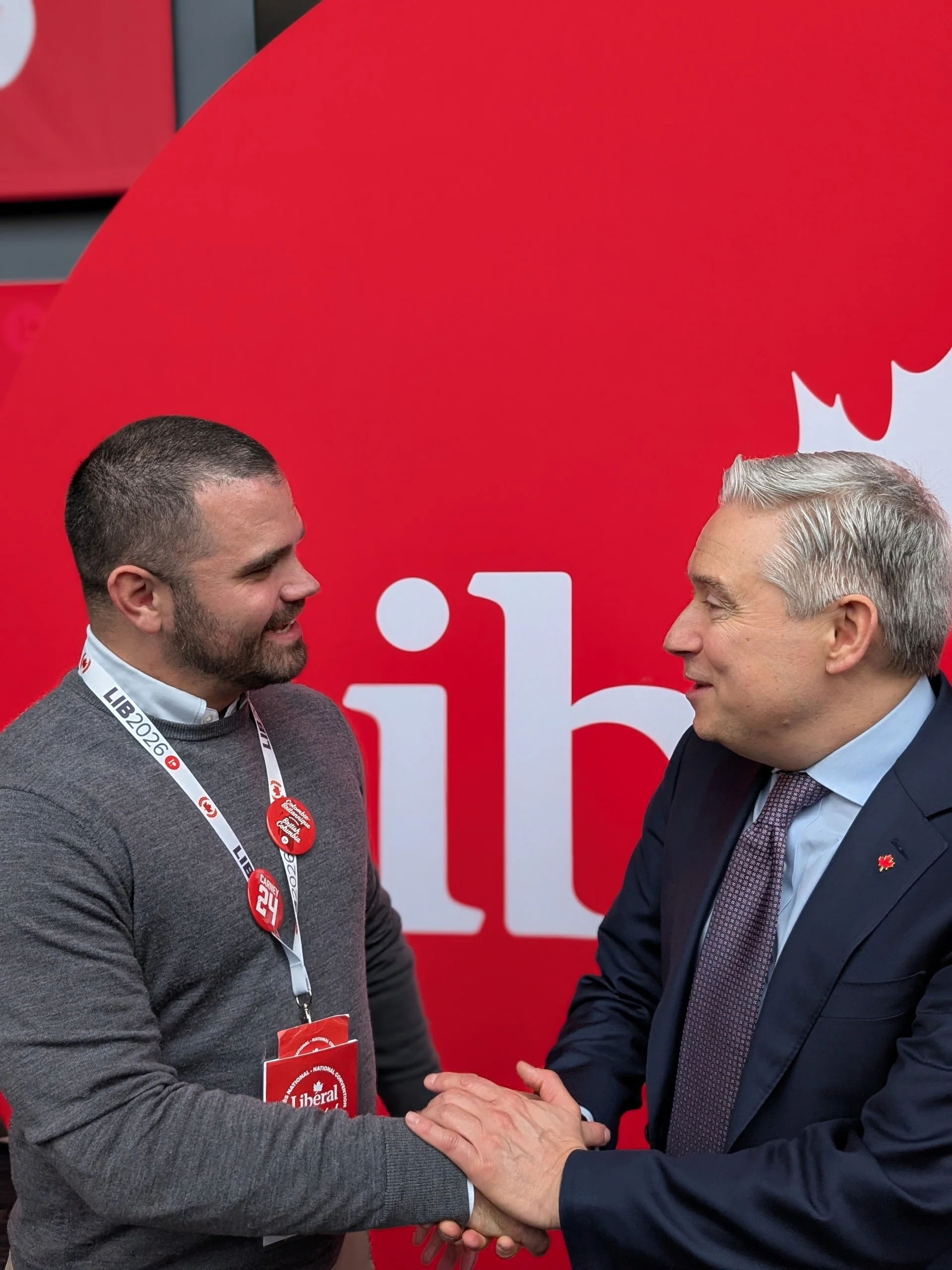
Myself and Minister of Finance and National Revenue Francois-Philippe Champagne
Delegates voted overwhelmingly to support a resolution calling for a minimum age of 16 for social media accounts, with the responsibility placed on platforms to enforce it. It's a non-binding policy resolution — it doesn't become law automatically — but the conversation on the floor was striking.
What I found most compelling was hearing from young delegates themselves. Many of them supported the measure — not because they want to be told what to do, but because they recognize the grip these platforms have. As Rachel Bendayan, MP for Outremont in Montréal, who championed the resolution put it, many young people feel they have no choice but to be on social media. That's not freedom. That's a design choice made by companies optimizing for engagement, not wellbeing.
Prime Minister Carney has said a social media age of majority is part of the government's thinking on online harms legislation. I hope that conversation continues — and I hope it includes young people, parents, educators, and local leaders. Because the effects of these platforms don't play out in Ottawa. They play out in our schools, our homes, and our neighbourhoods. They play out in Port Moody.
Reaching Young Men and Boys
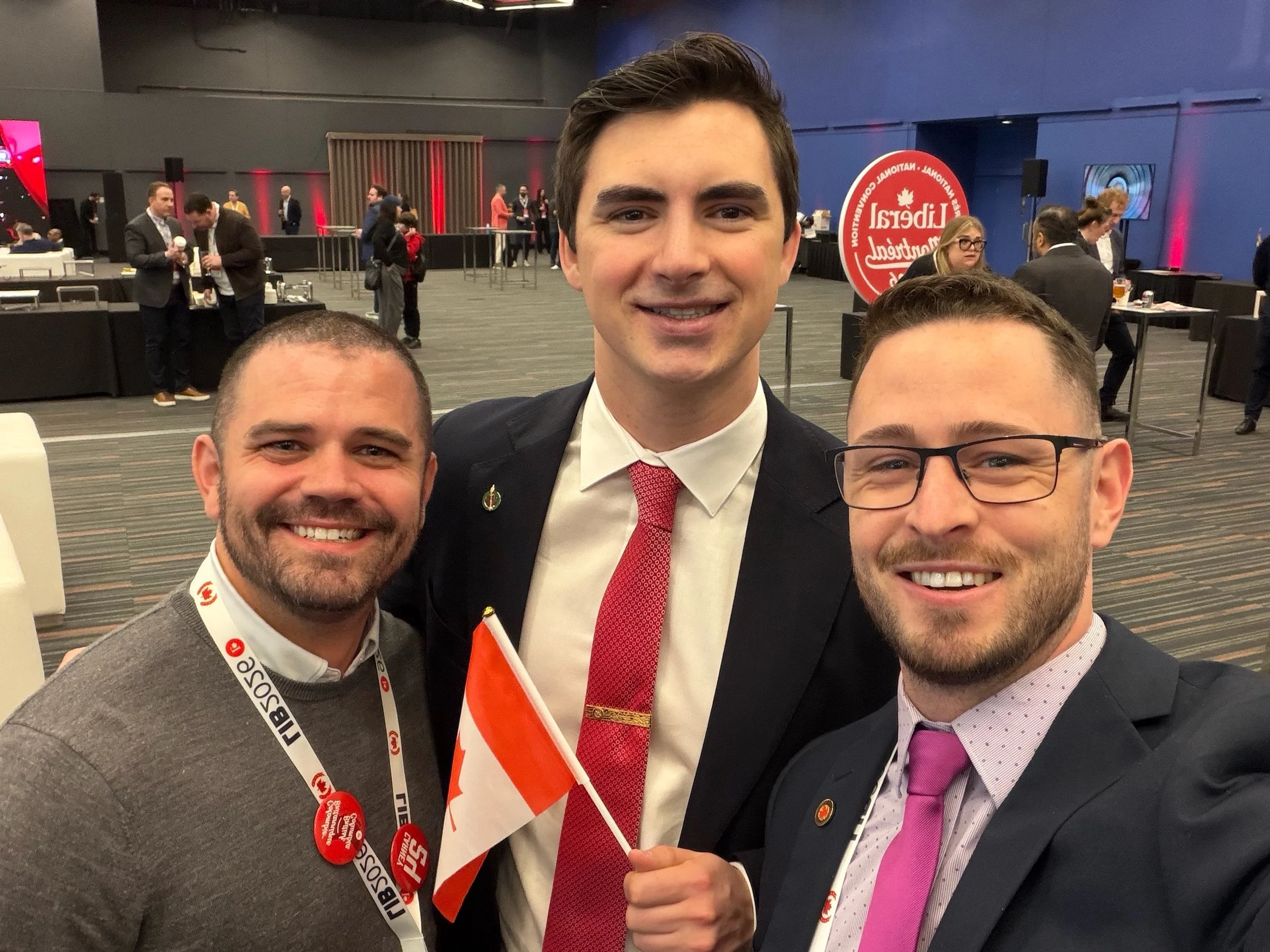
Myself, MP Jake Sawatzky (member of the Liberal Youth Caucus) and Neil Parkinson-Dow, Former Young Liberals of Canada BC Vice President.
This is the thread I keep coming back to. Over the weekend, I had several conversations — including with our own MP Zoe Royer and neighbouring MP Jake Sawatzky — about a trend that's hard to ignore: young men and boys are increasingly disconnected from community life.
Volunteerism among young men is declining. Social isolation is rising. And into that vacuum, a whole ecosystem of online content is offering easy answers — about masculinity, about purpose, about who to blame for feeling lost. The so-called "manosphere" isn't a fringe anymore. It's the water a lot of young guys are swimming in.
I don't think the answer is to lecture or to panic. I think the answer is to build better alternatives. That means community sport leagues that are accessible and well-coached. It means mentorship programs that actually meet young men where they are. It means public spaces — parks, rec centres, trails — that invite people to show up and be part of something. And it means being honest about the fact that social media platforms are often making this worse, not better.
This connects directly to the social media resolution and the sports panel. They're not separate issues. They're all part of the same question: are we building the kind of community where young people — all young people — feel like they belong?
Bringing It Home
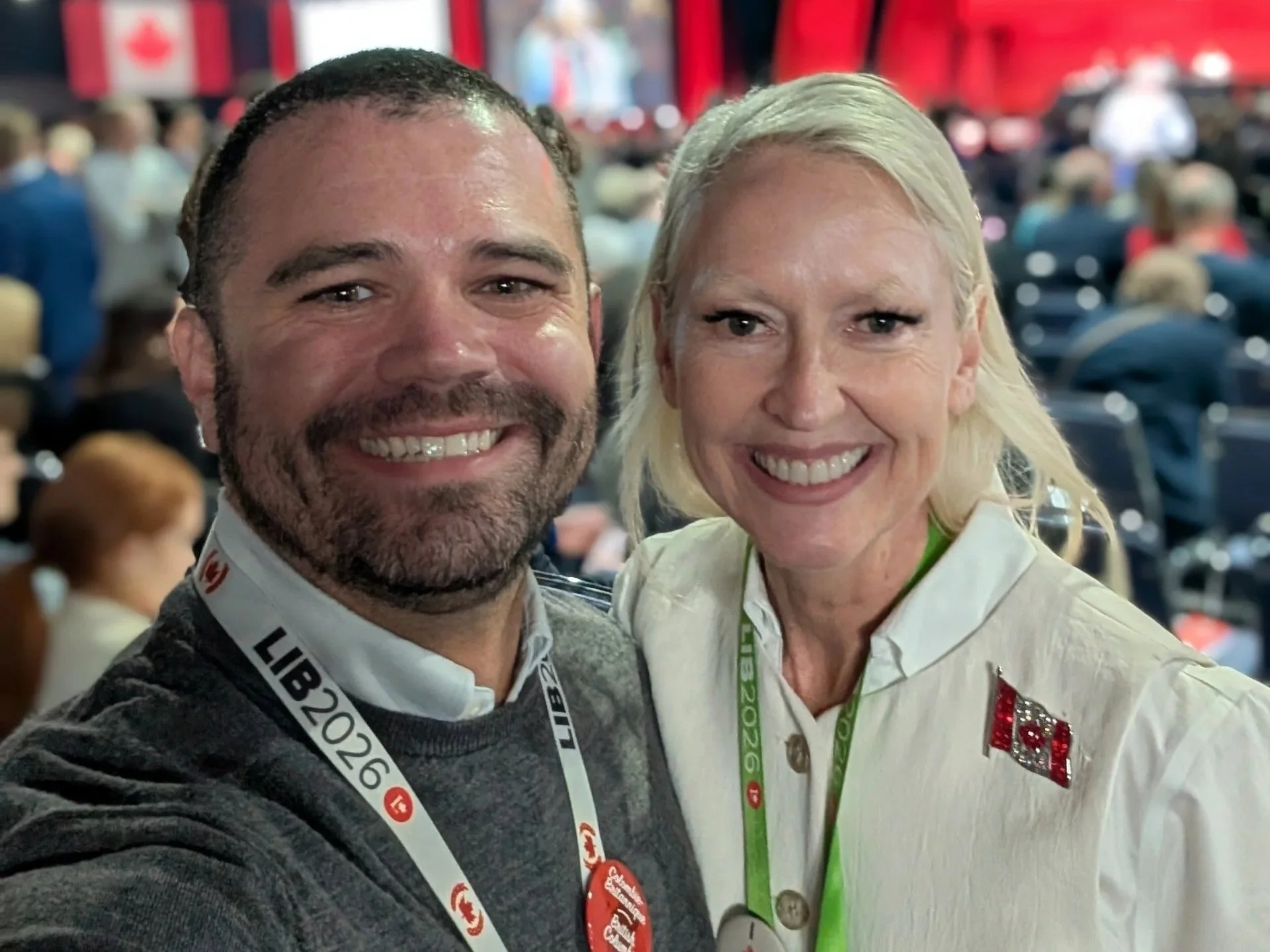
Myself and Zoe Royer, MP Port Moody-Coquitlam
Port Moody is a special place. We have the trails, the waterfront, the tight-knit neighbourhoods, and the community spirit to be the kind of city that gets this right. But it takes intention. It takes investment. And it takes people willing to have the conversations that matter — even the uncomfortable ones.
That's what I'm taking home from Montréal. Not talking points. Questions worth sitting with.