
The Jewish New Year and the person you mean to be
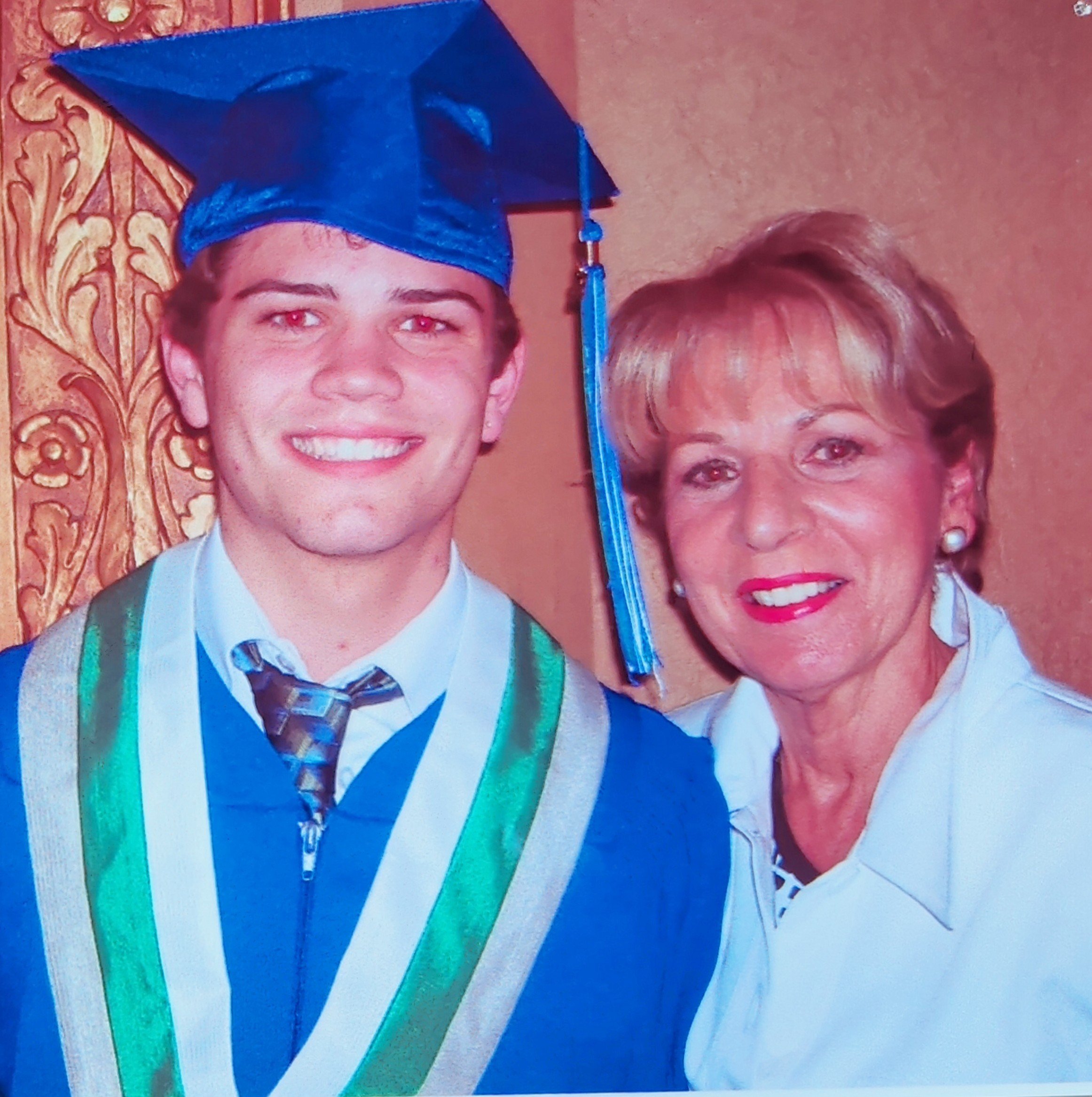
My Bubbie, Rhoda, and I at my high school graduation.
The Jewish new year opens with a request. Before any of the hard parts, we dip apples in honey and ask for a sweet year.
My Bubbie, Rhoda, was the one who handed them around. She died in 2014. Family came first with her, always, and she was the great connector of our family and our community. She knew who had surgery coming up and needed some healing sent their way, whose kid was doing fine in school but having a hard time with friends, who was miserable at work and needed a fresh start. She kept track. It sounds like a small thing to be known for until you try to do it, and then you notice how much attention it takes.
That's who I think about at this time of year, because the Jewish new year isn't really asking what I plan to do. It's asking who I plan to be.
January resolutions tend to be about habits: the gym, the phone, the budget. Rosh Hashanah, which began at sundown on Friday, asks something bigger. For the whole month leading up to it, you're meant to take an honest accounting of yourself, and in many synagogues a ram's horn called a shofar is blown each morning as a reminder that the reckoning is coming. Maimonides, the most influential Jewish legal thinker of the Middle Ages, described the sound as an alarm clock. Wake up, look hard at what you've done, and turn back.
Turn back is the phrase that matters. The Hebrew word for repentance is teshuvah, and it literally means return. Not becoming someone new. Coming back to the person you meant to be.
Which rules out most of what passes for setting an intention. The usual version borrows someone else's life, a person you admire from a distance, and sets that up as the target. Returning is a different exercise. It assumes you already know what you're like at your best, and that the gap between that and an ordinary Tuesday is the thing worth closing. Nobody outside our family knew Rhoda's name. She wasn't trying to be anybody impressive, and the whole family organized itself around her anyway.
The prayer I wait for all year is Avinu Malkeinu, "Our Father, Our King." We only sing it at this season. The melody is haunting and uplifting at once, and when the whole congregation sings it together, voices rising in harmony, it's the most meditative few minutes of my year. Every line of it is in the plural. Not me, us. Which is the catch in this whole business of deciding who you want to be. Whoever that is, you're going to be it among other people, and they're the ones who'll be able to tell whether you managed it. Rhoda's kind of goodness didn't exist on its own. It only showed up in what she noticed about everyone else.
Sometime over the holiday, many Jews walk to a river or a shoreline, empty their pockets of bread crumbs and throw them in the water, casting off the past year's mistakes. It's my favourite part. There's something honest about emptying your pockets before you decide what to carry into the year.
Ten days after Rosh Hashanah comes Yom Kippur, the Day of Atonement, a full day of fasting and prayer that starts this Sunday night. The tradition says we're written into the Book of Life at the new year and the entry is sealed on Yom Kippur, so the greeting all week is a wish for a good sealing. And this is where an intention gets tested, because Jewish law is blunt about what the day can and can't do. Fasting and prayer settle what's between you and God. For something you did to another person, the day does nothing at all until you've gone to that person and made it right. Maimonides adds the other half. When someone sincerely asks your forgiveness, you're expected to give it, and not to be cruel about the asking.
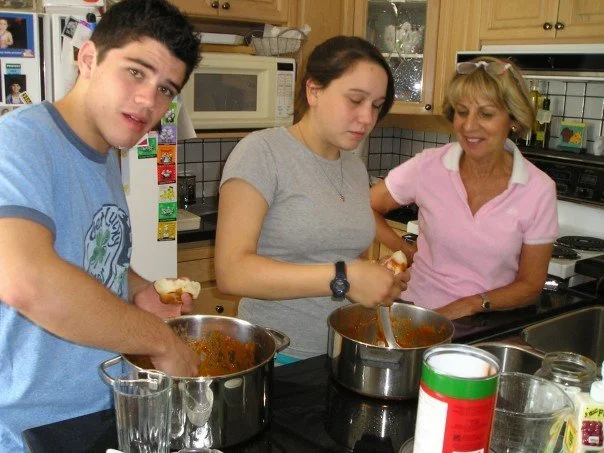
My sister, my Bubbie, and I making her famous sweet and sour meatballs.
So any honest answer to who I want to be collapses fairly quickly into how I treat the people around me, and whether I've kept track of them the way she did.
You don't need a shofar to borrow the practice. Take these ten days. Ask who you intend to be by next September, and who you'd need to call first to get there. Be specific enough that someone who knows you could tell, a year from now, whether you made it.
Mine, for the year ahead, is to be generous about people's motives and rigorous about their ideas. There's a line in the rabbinic tradition that says to judge every person favourably. The image behind the Hebrew is a scale, and you're told to tip it toward merit. Port Moody is going to spend this fall arguing in public about its future, and I'd like to come out the other side still assuming the best of the people I disagreed with, and still on speaking terms with all of them. My grandmother would have considered that the bare minimum.