
St. Johns Street Has a Once-in-a-Lifetime Chance to Become a Great Street
The City's redesign project is a step forward. But it's not enough.
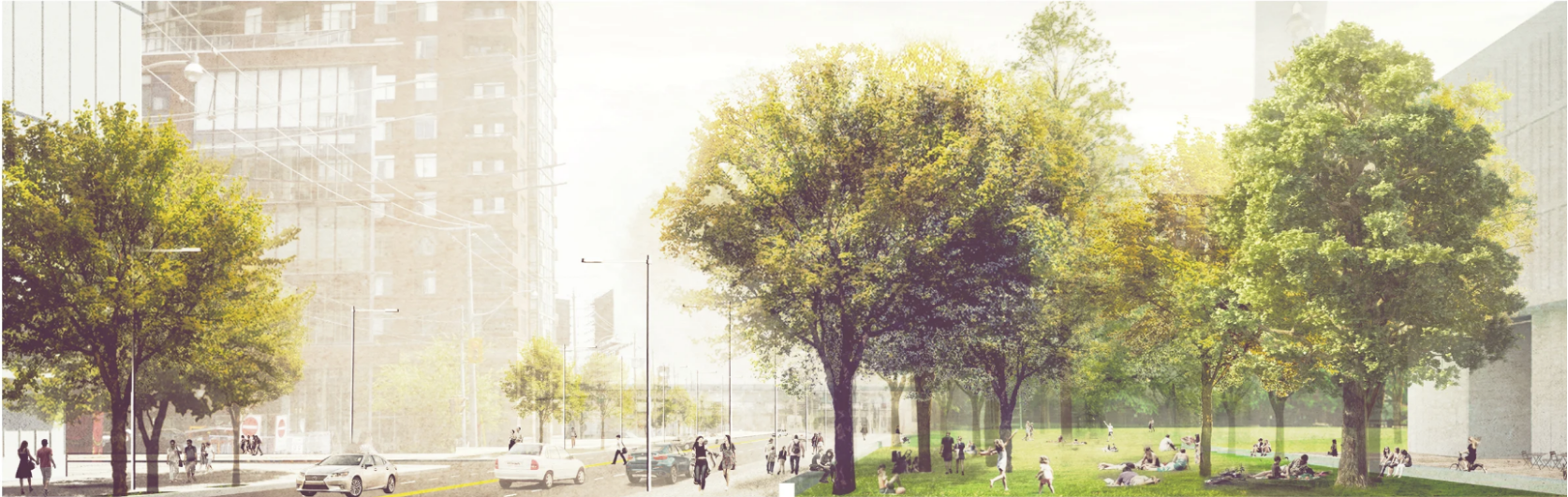
Toronto Core “Great Streets” Transformation Project (Source: Public Work) https://publicwork.ca/projects/to-core-great-streets-transformation
Thousands of people are about to move to Moody Centre.
Growth is coming — two buildings from PCI, three from Beedie, a provincial project on government land near the SkyTrain station. When it's all built out over 20 to 30 years, the Moody Centre transit-oriented development area will add somewhere in the range of 2,000 to 3,000 new homes to a neighbourhood that today is mostly low-rise buildings, light industrial lots, and surface parking.
All of those people will need somewhere to walk. Somewhere to grab a coffee. Somewhere to bump into a neighbour, sit on a bench, let their kids run ahead a few steps. They'll need a main street.
They already have one. It's called St. Johns Street. And right now, we have a once-in-a-generation chance to make it great.
What makes a street great
There's a book that urban designers have been obsessed with for over thirty years. It's called Great Streets, by Allan Jacobs. The premise is simple: what are the physical, designable qualities that make a street a place people actually want to be?
Jacobs studied streets all over the world — the Ramblas in Barcelona, boulevards in Paris, residential streets in Richmond, Virginia, medieval lanes in Rome — and found that the best ones share a set of common traits. Wide sidewalks. Street trees. Buildings that define the space without overwhelming it. Windows you can see through. Places to stop and sit. Interesting facades at eye level. Clear beginnings and endings.
The insight that stuck with me: great streets aren't great because of what drives down them. They're great because of what happens on the edges — the sidewalks, the storefronts, the patios, the benches. The edges are where public life happens. The road in the middle is just the part that moves you from one edge to the other.
I think about this every time I walk down St. Johns.
The bones are already here
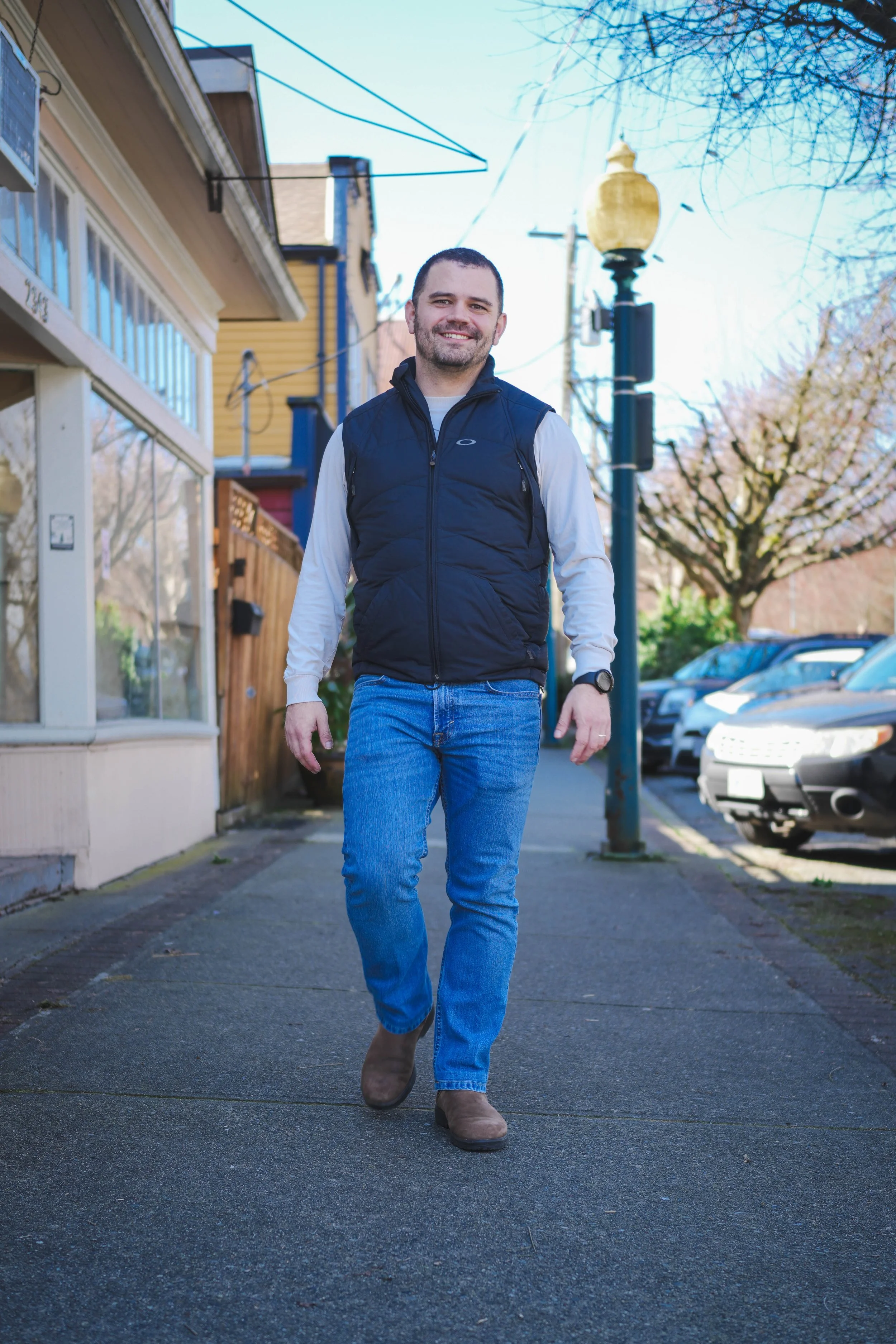
Walking along Clarke Street.
St. Johns Street is Port Moody's main street. It's where the businesses are, where the restaurants and coffee shops cluster, where the spine of the community runs. The block between Moody and Queens has genuine character — independent businesses, older facades with personality, the kind of commercial mix that chain-dominated strips can only dream of. Vancouver Honey Cafe. Originals and Vivio's just off on Clarke. The Port Moody Arts Centre. Brewers Row is a short walk away.
And once a year, on Car Free Day, when the cars disappear between Queens and Moody, you can feel what St. Johns wants to be. The street fills with people — families, dogs, neighbours running into each other. Live music. Lineups at food vendors that spill across the actual road. For a few hours, it becomes Port Moody's living room.
New development all along St John’s Street is bringing more opportunity for placemaking too.
The bones of a great street are here. The question is what we do with them.
The gap between what it is and what it could be
Most days, St. Johns doesn't feel like a great street. It feels like a highway.
The sidewalks are narrow in places — barely wide enough for two people to walk side by side. The traffic is steady and often fast. Crossing the street can feel like an act of negotiation rather than a casual decision. Street trees are inconsistent — some blocks are shaded and pleasant, others are exposed and hard-edged. There are stretches where parking lots and blank walls interrupt the rhythm of storefronts, breaking the sense of enclosure that Jacobs identified as essential to a street that works.
That's the reality today, serving a neighbourhood of modest density. Now imagine adding thousands of new residents a few blocks south, all of whom will walk, bike, or take transit to get to St. Johns. The street that can barely handle its current pedestrian load is about to become the front door for one of the largest residential developments in Port Moody's history.
If we don't rethink St. Johns now, the window closes. Streets are expensive and disruptive to rebuild. The decisions being made in the next few years — about sidewalk widths, street trees, crossing design, setbacks, ground-floor uses in new buildings — will determine what this street feels like for the next 50 years.
The redesign that’s underway — and what it’s missing
The City of Port Moody is not ignoring St. Johns Street. A redesign project has been underway since the 2017 Master Transportation Plan identified the corridor as difficult for walking, cycling, and transit access. The project is being delivered in phases, and there’s genuine progress to point to.
“They address how vehicles, buses, and bicycles move through the corridor. They don’t address how people live on it.”
Phase 1, completed in 2024 between Albert Street and Moody Street, added a new multi-use path on the south side of the street, along with raised crosswalks, rain gardens, improved lighting, and separated bike lanes between Kyle and Grant streets. It won a HUB Cycling infrastructure award. It’s a real improvement, and credit is due to the staff and council members who made it happen.
Phase 2, from Moody Street to Dewdney Trunk Road, is now in conceptual design. The city presented a concept to council on April 21, 2026. The long-term vision is promising on paper: four general purpose travel lanes, separated bicycle facilities, wider sidewalks, and landscaped boulevards. But the long-term vision depends on right-of-way that doesn’t yet exist — it will only be achieved over time, as redevelopment occurs along the corridor.
What’s actually being built in the near term is narrower. The “rapid implementation” stage focuses on switching the underutilized westbound HOV lane to an eastbound HOV lane, installing a bi-directional protected bicycle lane on the north side, and eliminating some north-side parking to make room. These are useful changes — they close a gap in the cycling network and improve eastbound transit reliability during rush hour. But they are, fundamentally, a transportation operations project. They address how vehicles, buses, and bicycles move through the corridor. They don’t address how people live on it.
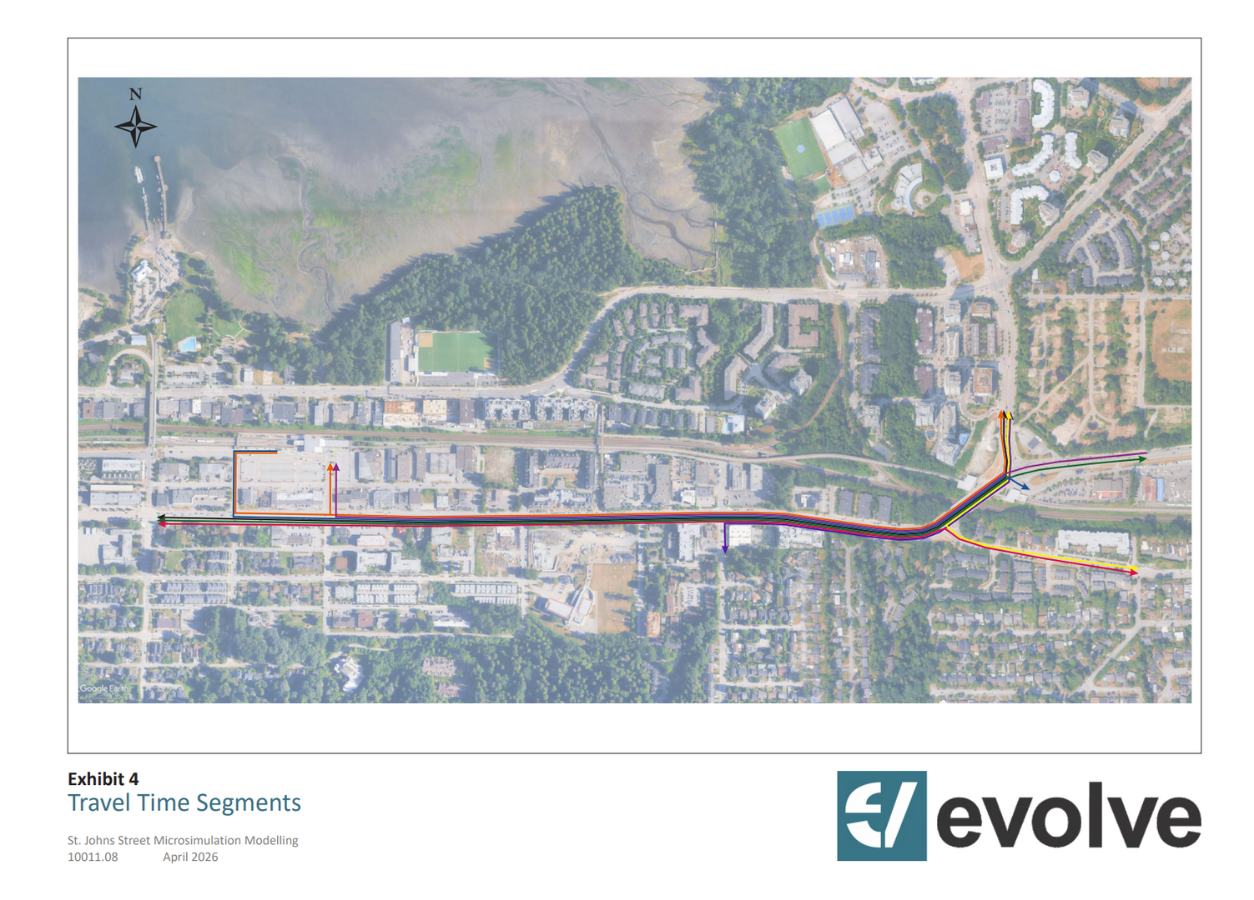
Excerpt from the St. Johns Street Phase 2 – Transportation Upgrades report from the April 21, 2026 Council Meeting.
This is the gap I keep coming back to. When the city conducted public engagement for Phase 1 in 2022, residents were asked to rank the amenities they cared about most. The top priorities were trees, landscaping, lighting, and green infrastructure — and having separate facilities for cyclists and pedestrians. The community was asking, in its own language, for a great street. And the project has responded, primarily, with a cycling facility and a lane reallocation.
That’s not a criticism of the engineering. It’s a criticism of the scope. The redesign project has been framed from the start as an active transportation and traffic operations initiative. It lives in the engineering department. Its funding comes from TransLink’s Multi-Use Pathway Infrastructure Program and Bus Speed and Reliability Program, and from the provincial Active Transportation Infrastructure Grants Program. Those are legitimate and important funding sources. But they come with mandates that centre cycling infrastructure and transit performance — not sidewalk widths, not street trees, not building interfaces, not the broader question of what kind of place St. Johns Street should be.
The 2025 Master Transportation Plan update reinforced this framing. Its Big Move 3 calls for reallocating a minimum of 10 percent of road space from vehicles to sustainable modes of travel, green infrastructure, or public spaces. It’s notable that “green infrastructure” and “public spaces” are in there. But when you look at how the St. Johns redesign is actually being implemented, the reallocation is going almost entirely to cycling and transit operations. The public realm elements — the wider sidewalks, the tree canopy, the landscaped boulevards — are deferred to a future that depends on private development delivering the right-of-way.
I think we can’t afford to wait. If the buildings go up before the street is designed as a great street, we lock in the conditions we have now — narrow sidewalks, inconsistent canopy, blank podium walls — for decades. The rapid implementation stage is the city’s one chance to set the tone for what St. Johns is becoming. And a protected bike lane, however welcome, does not by itself make a main street.
What a great St. Johns could look like
I'm not a planner, and I'm not proposing a specific redesign. But I've walked this street enough times to know what I wish were different — and what the people arriving in Moody Centre are going to need.
Wider sidewalks through the commercial core. Enough room for a patio, a planter, and a parent with a stroller to coexist without someone stepping into the road. Great streets make space for lingering, not just passing through.
A consistent tree canopy. Jacobs identified trees as the single most common element of the world's best streets. They provide shade, seasonal beauty, and that sense of enclosure that makes pedestrians feel welcome. A full canopy on St. Johns would transform the experience of walking it — and it would make the street more resilient to heat as the climate warms. The cherry blossoms outside the Sonrisa building are beautiful, but they only exist in front of that building.
Better crossings. Not just painted crosswalks, but the kind of intersection design that manages traffic effectively while signalling to drivers that this stretch of road belongs to people on foot. Curb extensions, raised crossings, shorter crossing distances. The toolkit exists. Other cities use it.
Ground-floor transparency in new development. As new buildings go up in and around Moody Centre, the ground floors facing St. Johns need to be active — windows, doors, retail, life. Nothing kills a street faster than a blank podium wall. The OCP's guidance on this matters, and it matters that it gets enforced.
And a sense of arrival. Jacobs noticed that great streets are framed — they start somewhere and end somewhere. Right now, St. Johns fades in and out. A gateway at each end of the village core — public art, distinctive paving, a landmark planting — would give the street an identity and tell people: you're here. This is the heart of Port Moody.
The window is now
The Moody Centre TOD, the Kyle Centre redevelopment, the new Kyle Park, the PoMoArts connection — all of these projects are converging on the same few blocks at the same time. That almost never happens. It creates pressure, absolutely. But it also creates the kind of opportunity that cities get maybe once in a lifetime: the chance to coordinate investments and actually shape a neighbourhood rather than just react to it.
We don't have to look far for a model. Just across the inlet, the City of North Vancouver is doing exactly this with Lonsdale Avenue. Their Lonsdale Great Street Project — a 20-year plan developed with Gehl, the internationally recognized urban design firm — aims to transform Central Lonsdale into a walkable, vibrant commercial corridor with wider pedestrian zones, better public spaces, and three distinct character areas along the street. Council just endorsed the plan. They hired world-class expertise. They engaged the community. They committed to a long-term vision. They even formed a new Business Improvement Association to make sure local businesses have a seat at the table.
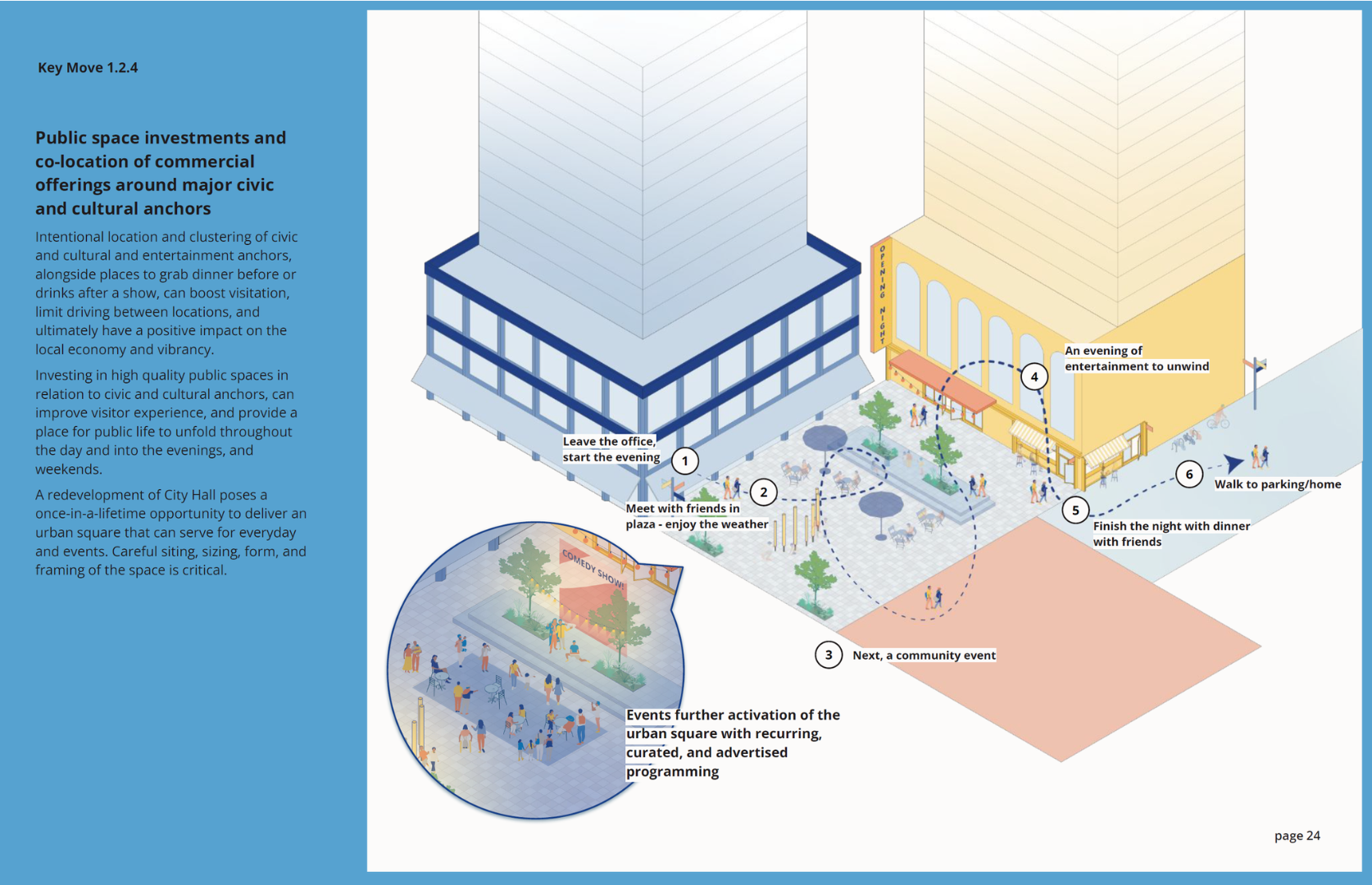
Excerpt from the City of North Vancouver Lonsdale Great Street Project report. (https://www.cnv.org/City-Hall/About/Capital-Projects/lonsdale-great-street-project)
That's what intentional street-making looks like. Port Moody could learn from it — and we have advantages North Vancouver doesn't. We have a SkyTrain station delivering people directly to the doorstep of our main street. We have the waterfront and trail network. We have Brewers Row and a growing cultural identity. What we don't yet have is a plan for St. Johns Street that matches the ambition of what's happening around it.
Allan Jacobs passed away in early 2025 at 96. He spent his career arguing that streets are the most important public spaces a city has — more important than parks, plazas, or any single building. Great streets don't just happen, he wrote. They get designed, and then they get cared for.
St. Johns Street has the bones. Moody Centre is bringing the people. The question is whether we seize this moment to build the street those people — and the people already here — deserve.
I think we should. And I think we only get one shot.
What do you think? What would make St. Johns the kind of street you'd want to spend time on — not just drive through?