
Where Your Property Taxes Go — And Why the Source Matters More Than You Think
Every year around this time, the conversation starts: property taxes are going up again.
In 2026, Port Moody's average household will see an estimated increase of about 4.25 percent — roughly $128 more for the year. That follows a combined increase of over 21 percent across the previous three budget cycles. People are frustrated, and I get it. Every dollar matters, especially right now.
But here's the thing I keep coming back to: the rate of the increase is only half the story. The other half — the part that doesn't get nearly enough attention — is where the tax revenue comes from in the first place.
So let's talk about that.
The basics
When you pay your property tax bill, you're actually paying several different taxes collected by the City on behalf of itself and other authorities — Metro Vancouver, TransLink, BC Assessment, the school district, and others. The portion that stays with the City funds everything from roads and sewers to parks, police, fire, and rec programs.
The City sets its own tax rate each year to raise the revenue it needs to balance the budget. In 2026, Port Moody will collect about $65.6 million in property taxes from residents and businesses combined.
Here's where it gets interesting.
Residential vs. commercial
Property taxes come from different classes of property — residential, commercial, industrial, and a few others. In most cities, the split between residential and commercial/industrial revenue determines how much of the burden falls on homeowners.
Cities with a healthy mix of commercial and industrial properties can spread the cost. Cities that are predominantly residential end up leaning harder on homeowners for every new road, every new park, every infrastructure repair.
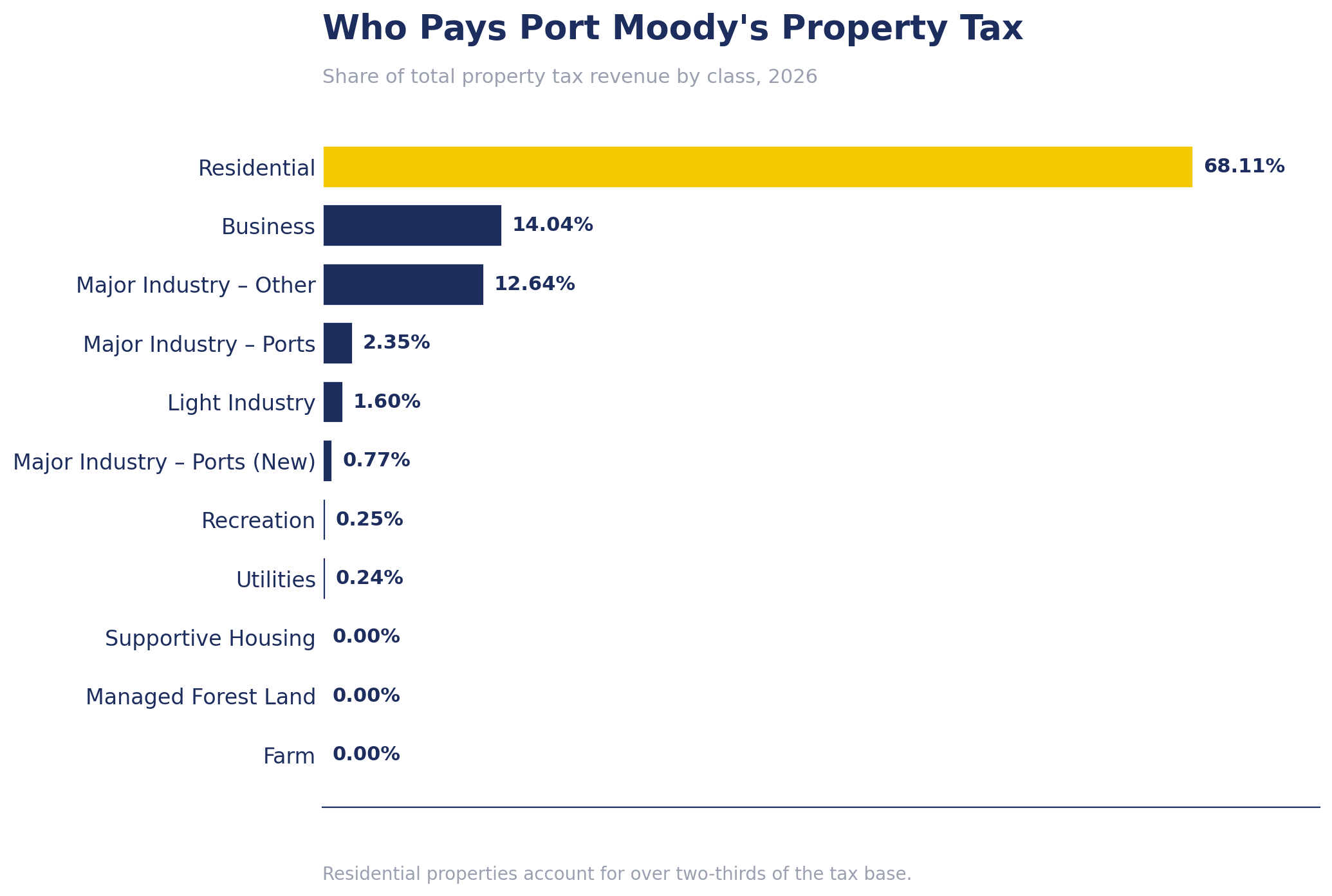
Port Moody has historically been a small, largely residential city. Over the years, we've lost significant industrial tax base — and the new development coming in is overwhelmingly residential. Towers are going up in Moody Centre and around Inlet Centre. That means thousands of new residents, which is great for vibrancy and transit ridership — but it also means thousands of new residents whose infrastructure needs are funded primarily through residential property taxes.
The question I keep asking: as Port Moody grows, are we growing in a way that creates a balanced tax base — or are we doubling down on residential and hoping the math works out?
Why office and commercial space matters
This isn't an abstract planning question. It's a dollars-and-cents question for every homeowner in Port Moody.
Commercial and office space generates property tax revenue at a higher rate per square foot than residential. Businesses pay light and power taxes. They bring daytime foot traffic that supports local retail. They create local jobs, which means fewer people commuting out of the city and more people spending money where they live.
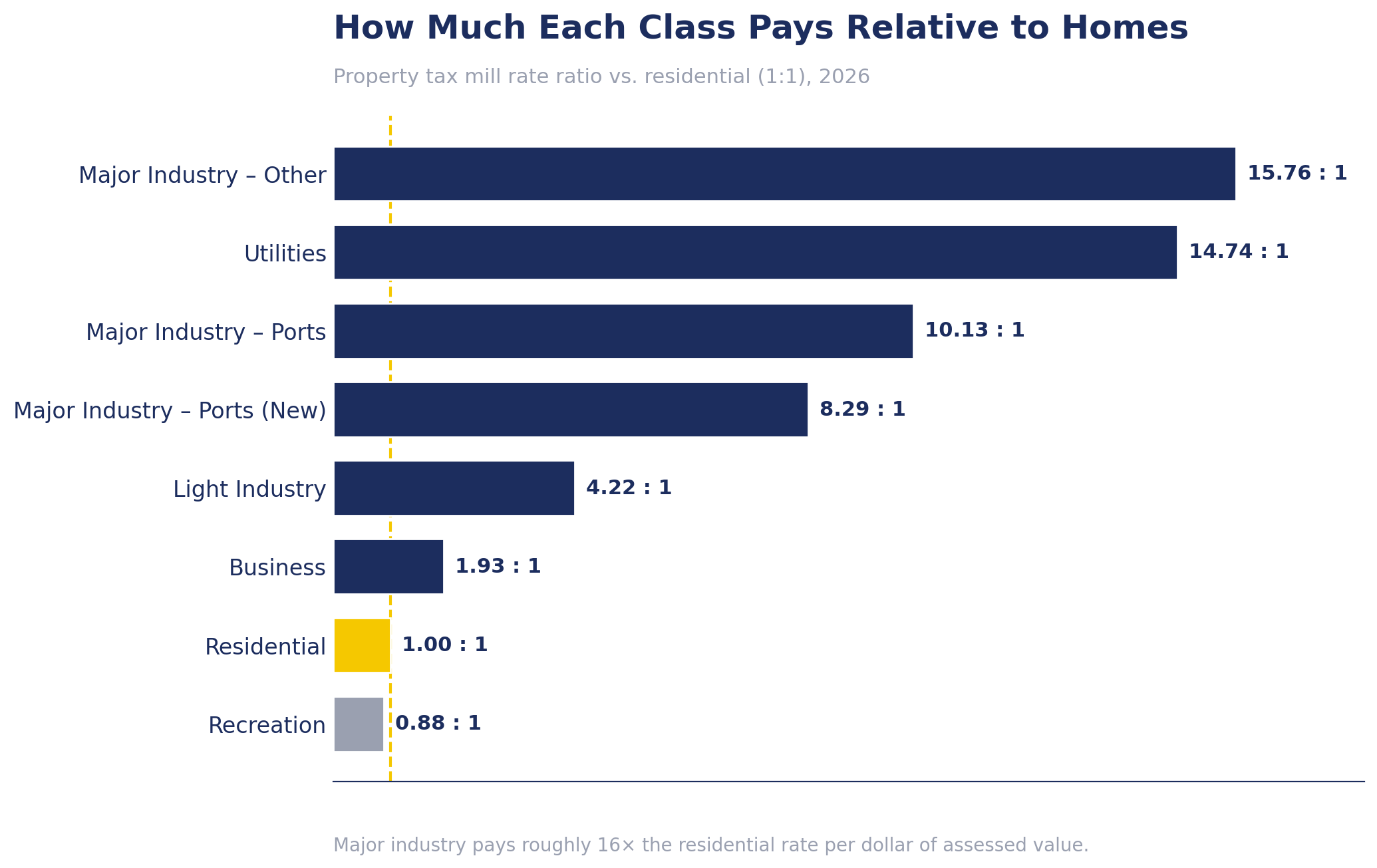
The Moody Centre TOD area envisions approximately 2,000 new jobs alongside the thousands of new homes. That's promising — but only if the commercial and office space actually gets built and occupied. It's one thing to put it in a plan. It's another to make sure the economics work and the space fills up.
Port Moody has an opportunity here. The SkyTrain is already built. The density is coming. The question is whether we're intentional about making sure that growth includes the kind of commercial and employment space that helps share the tax burden — or whether we let the residential side of the ledger do all the heavy lifting.
What this means for you
If you're a homeowner in Port Moody, the residential-commercial tax balance directly affects your bill. A healthier commercial tax base means the cost of running the city doesn't fall entirely on your household.
If you're a renter, it matters too — because those property tax increases eventually get passed through in the cost of housing.
And if you care about the kind of city Port Moody becomes over the next 20 years, the question of economic development isn't separate from the question of livability. They're the same question.
I'm not an economist and I don't have all the answers. But I think this is a conversation more people should be having — especially as the budget gets finalized and the tax notices hit mailboxes this spring.
Where do you think Port Moody's growth should be headed? What would it take to bring more local jobs to this city? I'd genuinely love to hear your thoughts.