
Who can afford to sit on council?
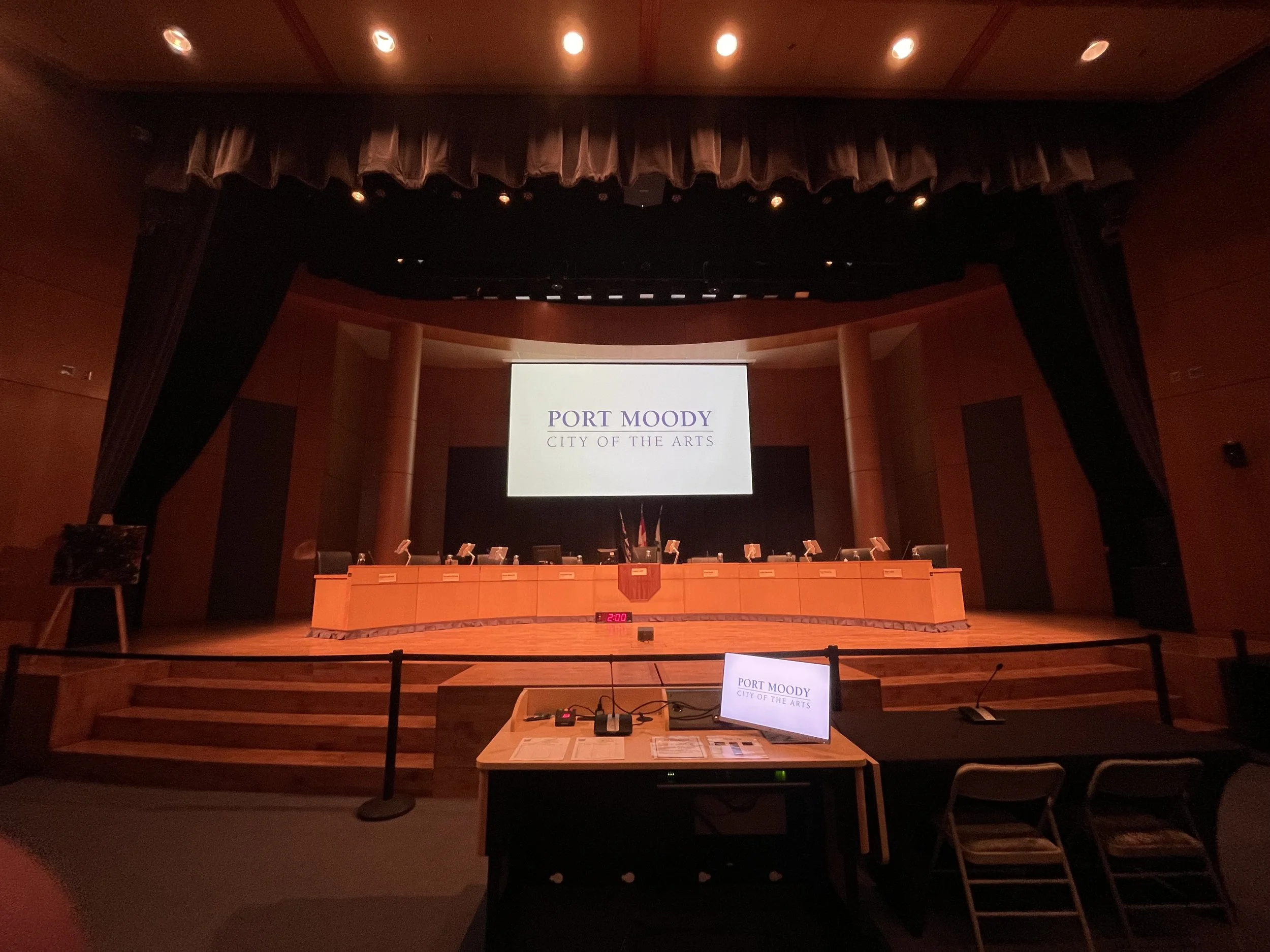
Port Moody Council Chambers
Watch enough council meetings in BC and you start to notice a pattern in who sits around the council tables. Retirees with time. People whose careers are generally already established and stable enough to absorb the hit. The occasional person with a flexible employer or a partner whose income covers the gap. What you rarely see is someone in their thirties with young kids and a mortgage, or a renter mid-career, or the owner of a small business that needs them in it five days a week. The sacrifice they need to make in their lives and the uncertainty that an election brings is often too much.
That's not an accident. It's the structure.
I can tell you exactly how the structure works, because I spent the past year preparing to run for council this October. A few weeks ago, Kyle and I sat down at our kitchen table and did the math. We wanted it to work. It didn't. What follows is the arithmetic we were doing, and none of it is unique to us.
A Port Moody councillor's base pay was set at $54,720 in late 2023 (it's risen a little with annual cost-of-living adjustments since). The job is officially part-time. In practice, it isn't. Council meets two to four Tuesday evenings a month. Standing committees meet on top of that. Most councillors chair or sit on several advisory bodies, plus regional ones like Metro Vancouver. Agenda packages routinely run into the thousands of pages, and reading them properly is the difference between a councillor who governs and one who just shows up to vote. Add community events most evenings and weekends, and the honest accounting lands somewhere between a serious part-time job and a full-time one. (That's my own estimate from watching the calendar, not an official figure.)
“Step away from a stable job with a pension to serve a term or two on council, and you’re trading away retirement security on top of salary. For a younger person, that compounds over decades.”
So picture the choice in front of a capable 34-year-old with two kids in daycare. On one side, a job with a steady paycheque, benefits, predictable hours, regular vacation. On the other, a public office that pays part-time wages for close to full-time hours, with evening meetings that collide with bedtime and bath time, a regular public critiquing of your decisions/opinions/appearance/personal life and no guarantee the job lasts past the next election. For most people in that position, it isn't really a choice.
Now add the part nobody talks about: to run at all, you often have to put your existing job at risk. There's no automatic right to leave for a municipal campaign. Some employers are supportive. Some aren't. I know of a candidate in a neighbouring city who asked their employer for leave to run, was refused, and had to quit outright to put their name forward. Win or lose, they'd given up the thing that paid their bills. Most people simply can't make that bet, and so they don't run.
There's no pension either. Step away from a stable job with a pension to serve a term or two on council, and you're trading away retirement security on top of salary. For a younger person, that compounds over decades.
We've made a different choice at other levels of government. A B.C. MLA earns about $122,000 a year and vests into a pension after six years. An MP earns more still, with a pension, and both get staffed offices to handle constituent work. Whatever you think of those numbers, they reflect a decision that the work deserves a salary you can raise a family on and the support to do it well. Municipal government runs on part-time pay and goodwill, and it's the level that decides whether your street gets a sidewalk, whether your kid gets swimming lessons, how your garbage gets picked up—the things that touch your life every single day. The people we ask to make those calls are the ones we back the least.
Stack it all up and you get a filter. Not a deliberate one, but a real one. The structure quietly screens out anyone who isn't already financially secure, retired, or backed by an unusually flexible employer. That should worry us, because a council drawn from a narrow slice of the community tends to see the city through a narrow lens. The people most affected by housing costs, childcare, and transit are often the least able to afford a seat at the table where those decisions get made.
This isn't a Port Moody problem so much as a provincial one, and some of the people closest to it have said so plainly. Port Coquitlam Mayor Brad West has argued the province should set standardized remuneration for B.C. councils so that politicians aren't put in the position of voting on their own pay. He's been blunt about what the job actually demands: time, commitment, intelligence, consideration of all sides, and hard work. And when Port Moody's own council reviewed its pay in 2023, several members said versions of the same thing from the other side of the table. Councillor Diana Dilworth argued the decision should be taken out of council's hands entirely and left to a regular staff review. Mayor Meghan Lahti called the whole exercise uncomfortable and said increases should be triggered automatically. The people doing the job don't want to set their own cheques any more than residents want to read headlines about it.
Two changes would widen the door without anyone having to vote themselves a raise.
First, take the decision out of councils' hands. A provincial remuneration standard, tied to a transparent formula and adjusted on a regular schedule, would set fair pay based on the actual work and remove the awkward spectacle of elected officials approving their own cheques. Have it reviewed regularly by an independent advisory committee reporting to the Inspector of Municipalities.
Second, take care of the people who step forward. Give local elected officials access to a standardized benefits package when their city's plan doesn't cover them: extended health, mental health supports (a big one, given what this work asks of people), parental leave. And build a pension every local elected official pays into, run by the Union of BC Municipalities or a body it stands up. Match the MLA rule: serve at least six years before you can draw on it. None of this is extravagant. It's the basic security that lets someone with a young family or a career in progress put their name forward without betting their future on the outcome.
Port Moody is going to keep facing big decisions: how we grow, where housing goes, how we pay for the things a city needs. The quality of those decisions depends on the quality of the people willing to make them. Right now, we're asking a lot of the few who can afford to serve, and quietly turning away many who can't.
This summer, I was one of them.

I had hoped this would be my campaign photo. Maybe next time…